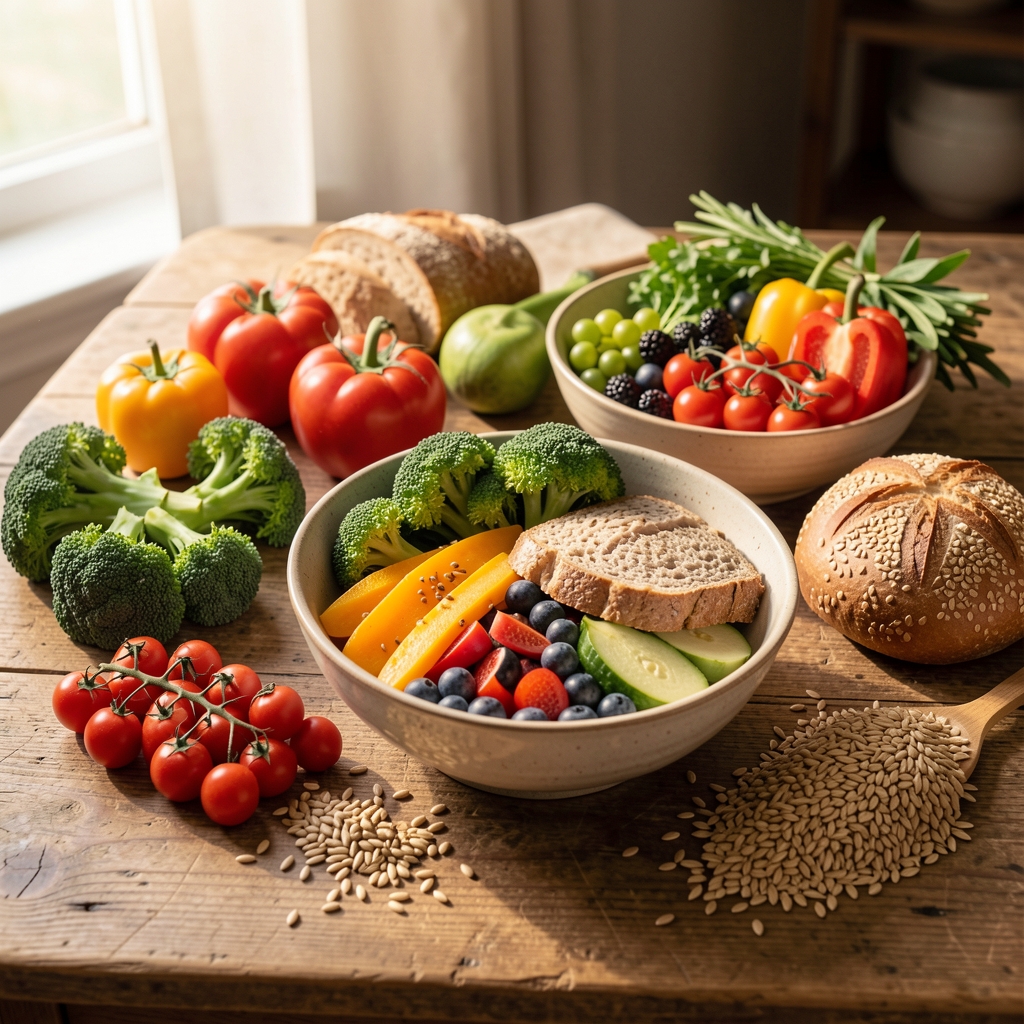
The winter kitchen, stripped of summer abundance, offers an unexpectedly rich subject for the writer interested in gut-friendly preparation. Fermentation — one of the older methods of food preservation — has attracted considerable interest from nutrition researchers over recent years. The practice itself, however, is far simpler than the research language around it might suggest, and considerably more interesting as a kitchen habit than as a wellness guideline.
Beginning in the Simplest Way
Tobias Caldwell began his season of fermented kitchen notes in November, with a single jar of shredded white cabbage and salt. No starter culture, no specialist equipment. Salt at approximately two percent by weight of the cabbage. A kilner jar weighted with a small dish. The process required a few minutes of preparation and several days of patience.
The result — a mild, lightly soured sauerkraut — was ready to eat within a week. It was not identical to commercially produced versions. It was sharper, more alive, and notably more variable from batch to batch. This variability, far from being a deficiency, proved to be one of the most interesting aspects of home fermentation. Each batch reflected the ambient temperature of the kitchen, the particular cabbage variety, the specific salt used.
The practice of fermentation encourages a different relationship with food preparation than most contemporary cooking methods do. It is, fundamentally, a practice of patience. One cannot rush it without disrupting the process. This enforced slowness has a quality that is worth attending to: it creates a rhythm of return — checking, tasting, adjusting — that draws the cook repeatedly into attentive engagement with what is being made.
What Fermented Foods Bring to a Weekly Meal Pattern
Across the winter months, Caldwell incorporated fermented preparations into his meals in a modest and unstructured way. A spoonful of sauerkraut alongside roasted winter vegetables. A portion of yoghurt — made in a small clay pot and left overnight — stirred into a dressing for a grain salad. A jar of quick-pickled red onion that sat in the fridge and was used across the week as a sharp counterpoint to richer dishes.
The effects on the weekly meal pattern were notable primarily in terms of variety and flavour range. Meals that might otherwise have been straightforwardly filling acquired a dimension of complexity — the sharp, tangy note of fermented preparations alongside the earthier flavours of root vegetables and pulses. Nutritionally, the inclusion of fermented whole foods added what published nutrition research has consistently identified as a potentially useful component of a balanced, varied diet.
"Each jar of fermented cabbage reflects the ambient temperature of the kitchen, the specific salt, the moment in the season. There is no precise replication. This is one of its virtues."
The writer is careful to note that the changes he observed in his own wellbeing across this period cannot be attributed with certainty to any single dietary adjustment. He was also sleeping more regularly during the winter months, eating more consistent meals, and exercising steadily. The complexity of cause and effect in nutrition is real, and honest reporting requires acknowledging it.
Fermentation and Seasonal Cooking
One of the most useful aspects of fermentation as a practice is how naturally it aligns with seasonal cooking. The surplus of summer — abundant courgettes, runner beans, tomatoes — can be preserved and extended through the colder months. Autumn's brassicas and root vegetables take particularly well to lacto-fermentation.
Working with seasonal produce across a full year means that the fermentation practice itself changes character with the seasons. The summer jars are light and aromatic — pickled cucumbers with dill, fermented runner beans, a bright tomato relish that was consumed enthusiastically well into October. The winter jars are denser, more mineral, more sustaining — sauerkraut, fermented beetroot, a batch of kimchi-adjacent cabbage that proved useful with rice and eggs throughout January.
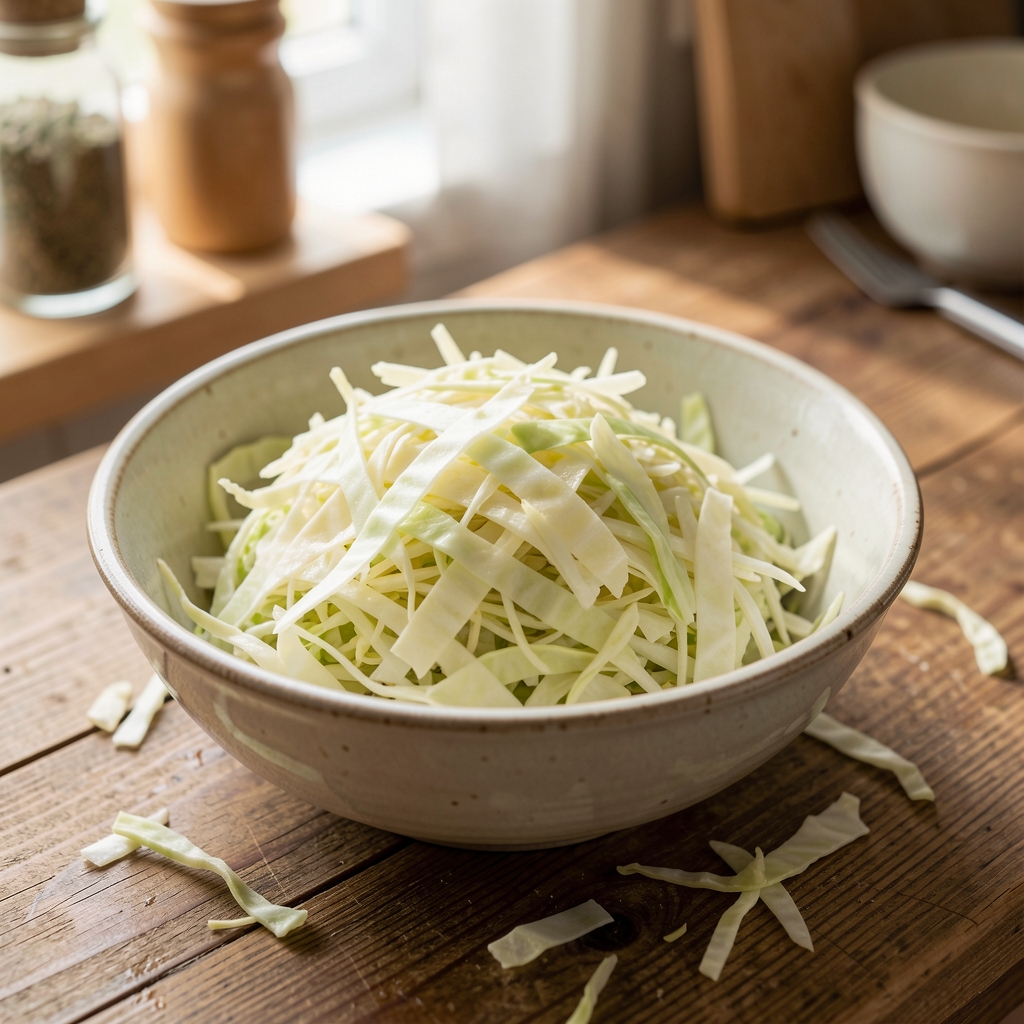
Preparation note — shredded cabbage at the beginning of a fermentation cycle, January 2026
Practical Notes on Getting Started
The writer's practical notes from the season offer several recurring observations for those interested in beginning. First: salt quality matters more than technique. A good, unrefined salt — without anti-caking agents — produces more consistent results. Second: temperature matters. The cooler the kitchen, the slower the fermentation, and generally the more complex and nuanced the final flavour. A warm kitchen produces faster but sometimes more aggressive results.
Third, and most importantly: tasting regularly is essential. Not only to assess readiness, but to build familiarity with how fermentation progresses. The process has a sensory arc — from raw and salty at the beginning, through an active, almost effervescent middle phase, to a settled, sour, fully fermented endpoint. Learning to read this arc through taste rather than recipe instruction is one of the most genuinely educational aspects of the practice.
The fourth observation concerns quantity. Beginning with small batches is sensible. A single jar of sauerkraut is sufficient for several weeks of modest daily use, and it allows for adjustment — of salt ratio, fermentation time, the amount of ambient pressing — before committing to larger quantities. The kitchen does not need to be reorganised to accommodate fermentation. A shelf, a few jars, a kitchen scale.
Fermented Foods in the Context of Balanced Eating
Viewed from the perspective of a balanced, varied diet, fermented foods occupy a useful but modest niche. They are not a correction for an otherwise poor diet, nor a concentrated source of any single nutrient. They are, rather, one component of a varied eating pattern — alongside fresh vegetables and fruits, whole grains, pulses, and good-quality protein — that adds variety, flavour complexity, and a connection to older methods of food preparation.
Published research in the area of gut-supportive nutrition consistently notes that dietary diversity — the variety of different foods consumed across a week or month — is among the most reliably positive signals. Fermented whole foods contribute to this diversity while also adding a practical dimension to the kitchen: the ability to preserve, extend, and transform raw ingredients into something distinctive.
For Caldwell, the season of fermented kitchen notes ended not with a conclusion but with a continuation. The practice had become sufficiently routine — a small weekly ritual of preparation, checking, and incorporating — that discontinuing it would have felt like losing something. The jar on the shelf, working slowly, has become part of the rhythm of the winter kitchen.
- Lacto-fermentation requires minimal equipment — a clean jar, salt, and patience are the essential elements.
- The practice aligns naturally with seasonal cooking — different produce at different times of year produces varied, complementary fermented preparations.
- Small daily portions incorporated into varied meals contribute to dietary diversity rather than acting as a standalone nutritional solution.
- Regular tasting develops familiarity with the process — the sensory arc from raw to fully fermented is learned through repetition, not instruction.
- Starting small — one jar, one vegetable — is sufficient to establish the rhythm before scaling.